

LOOK, FEEL and THINK YOUNGER with Flavay®

"[A] method for preventing and
fighting the harmful biological effects of free radicals...namely...inflammation...
[and]
collagen degradation."
—U.S. Patent 4,698,360 inventor, Dr. Jack Masquelier.
Flavay® binds to collagen fibers in your skin and realigns it to
a more youthful, undamaged form.
Flavay® can have a dramatic, visible effect on your skin. The nutrients
in Flavay® can be considered as 'collagen vitamins' because they
partake in the biosynthesis of collagen and prevent its destruction. Through
synergistic action with vitamin C, Flavay® strengthens and rebuilds
the bodys natural collagen proteins and has the remarkable ability
to reactivate damaged collagen and elastin. Research has demonstrated
that Flavay® binds to collagen fibers and realigns them to a more
youthful, undamaged form. (The same research also established that common
bioflavonoids are completely inactive in this respect.) Flavay® improves
the beneficial cross-linking between the amino acids of the fibers that
give skin its flexibility and strength while preventing the undesirable
cross-linking between amino acids that ages skin like leather. Laboratory
tests have demonstrated Flavay’s®
ability to reduce degradation of elastin fibers by up to 70 percent.
Flavay® enhances elasticity of your skin and offsets visible signs of premature
aging by strengthening
and rebuilding your bodys collagen proteins.
Flavay’s® ability to reactivate damaged collagen and elastin
has great implications for all of your bodys organs. Collagen is
required for the normal functioning of the joints, healthy cartilage and
bones, smooth gliding surfaces, synovial fluid, normal joint spaces and
normal soft tissues surrounding the joints. Collagen is the building block
of connective tissue, veins, arteries, ligaments and tendons, and every
tissue and organ.
Flavay® Improves Circulation to
Your Skin Cells
Our Customers Say: “Flavay® really does great things for my skin. It even makes acne scars go away! I'm not a doctor so I can't say what happened, but about 6-8 weeks into taking Flavay®, my acne scars lightened so that you don't notice them. My mother-in-law recently told me I look 15 years younger!”
—Mr. R. E.
Improved circulation is another reason that Flavay® is an important
part of optimally nourishing your skin. Over 50 years of scientific and
clinical research establishes that Flavay® actually strengthens collagen
in vascular walls and capillaries (the smallest vessels), by making the
vessels stronger and more elastic. As we age, the tiny capillaries begin
to break down, resulting in diminished blood flow. Fortifying these tiny
blood vessels will improve circulation throughout the body, including
the skin, delivering blood and nutrients to your skin. Improved circulation
results in well-nourished, healthy skinwhich is radiant and more
youthful.
Inflammations and Edema
Our Customers Say: “I work on my feet all day, lifting heavy loads, and I developed severe edema so that I could hardly walk. Neither my doctor nor my chiropractor have been able to do anything to help. I was almost ready to go on disability, and I was growing paranoid over it because I am 63 and need to work for two more years to retirement. One painful night in desperation I got online and searched for relief from edema. I found Flavay® and ordered some. I have now taken 3 capsules a day for about a month and there is no more edema. I got reborn! I gave a brochure to my doctor. I wish more people knew about this.”
—Mr. D. P.
Flavay® has been licensed and sold in France for treating edema
and inflammations since 1950. Puffiness of the eyes and an overall bloated
look and feel are examples of edema. It involves the leakage of blood
serum into surrounding tissues and Flavay® has shown that it can
reduce this leakage by strengthening capillary walls.
One of the very first benefits observed and studied by the inventor of
Flavay®, Dr. Jack Masquelier, in as early as 1947, was its anti-inflammatory
effect. His and others' research demonstrated that Flavay® inhibits
the release and synthesis of histamine (which produces accelerated blood
flow, dilates capillaries and increases their permeability, thereby leaking
plasma into surrounding tissue), a key factor in the promotion of inflammation.
Numerous studies have demonstrated that the anti-histamine action of Flavay®
is obtained through inhibiting the activity of the enzyme histidine decarboxylase.
Research shows that Flavay® may lower the production of histamine
with as much as 86% inhibition of histidine decarboxylase. Inflammatory
reactions are not limited to edema and other problems typically associated
to vascular diseases; the factors that cause inflammation can also cause
conditions like allergies, bronchitis, and arthritis.
Flavay® Fortifies Your Immune Function
A strong immune system is the cornerstone of good healthif the
immune system is weak, it will eventually affect the other systems of
the body. Flavay® can boost your immune system in several important
ways. First, by increasing the activity of vitamin C, another important
immune booster, Flavay® gives the immune system more ammunition to
fight infection. Second, research demonstrates that Flavay® prevents
free radical damage to macrophages, a type of white blood cell that generates
nitric oxide to destroy bacteria, viruses, and host parasites.
Flavay’s® ability to help regulate nitric oxide can profoundly
influence the bodys immune functions. As long as nitric oxide is
produced in the right amount, it is beneficial to the body, but if nitric
oxide is overproduced, the effect can be toxic. When produced by immune
cells, nitric oxide fights infection, kills tumor cells, and promotes
wound healing. But when produced in excess by immune cells, nitric oxide
can trigger chronic inflammation, which can cause arthritis, colitis,
and inflammatory bowel disease.
Flavay® Protects Against Brain Aging
Flavay’s® antioxidant protection of brain cells is significant
as recent studies have established a connection between free radical damage
and cognitive impairment. Research demonstrates that Flavay® helps
regulate nitric oxide: a colorless gas produced by many different cells
in the body: from endothelial cells on the walls of the arteries to the
neurons in the brain to the disease-fighting cells of the immune system.
Nitric oxide modulates communication between brain cells and is thereby
deeply involved in concentration, learning and memory. And, by controlling
the muscular tone of blood vessels, nitric oxide regulates circulation
and normalizes blood flow. As long as nitric oxide is produced in the
right amount, it is beneficial to the body. Overproduction of nitric oxide,
however, promotes production of more free radicals in the brain, which
can hamper mental function and cause memory loss and brain aging. Thus,
Flavay’s® ability to help maintain the optimal level of nitric
oxide profoundly influences brain (and immune) functions.
Our Customers Say: “My psychologist husband has told me that the difference in my behavior and focus is huge since taking Flavay® and Flavay Plus®. I am definitely ADD, but was never diagnosed as a child. He is amazed at the changes in me, as am I.”
—Ms. Danielle S.
There is also evidence that Flavay® may help the body to regulate
enzymes which control the crucial neurotransmitters dopamine and norepinephrine,
chemicals that carry messages among brain cells and are involved in excitatory
responses. Flavay’s® ability to support healthy blood flow
to the brain is also important to brain function. Researchers have shown
that decreased blood flow to the brain plays a major role in age-related
brain disorders. Flavay® may also help deliver other
nutrients to the brain, such as zinc and selenium, which are essential
to normal brain function, according to recent research. Preliminary studies
have confirmed what many users of this remarkable complex have experienced:
striking benefits in improved concentration and mental focus.
Synergistic Help for Brain Function,
Memory & Acuity

Flavay Plus® has been shown to raise
cognitive performance to levels typical for as much as 12 years
younger.
Current research demonstrates that antioxidants work synergistically
with one another in the body. Flavay
Plus® utilizes this dynamic with a synergistic blend of Flavay®
and antioxidant vitamins and minerals and phytonutrients; formulated to
boost the brain and immune functionsthereby benefiting the whole
body.
Flavay
Plus® is formulated with phosphatidyl serine (Leci-PS),
a complex of amino and fatty acids extracted from soy lecithin, which
has proven to be a safe, potentially effective therapeutic agent in treating
memory deficit disorders and is an often-used supplement for attention
deficit disorders. Phosphatidyl serine has been the subject of many human
clinical trials regarding memory loss, mood, cognitive performance, learning
ability and stress. Many studies show that phosphatidyl serine can optimize
cognition. In the most famous human study, researchers gave 300 mg of
phosphatidyl serine a day for 12 weeks to 149 subjects over 50. Various
memory and learning tests were administered before and after. The results
showed that phosphatidyl serine managed to raise cognitive performance
to the levels typical for as much as 12 years younger.
Our Customers Say: “We are a middle-aged couple and we both have ADD and anxiety issues. We are both taking Flavay® and Flavay Plus® and began feeling better during the first week. Together we are slowly getting off of Zoloft. We are extremely pleased with Flavay® and Flavay Plus®.”
—Mr. and Mrs. P.
Published, double-blind research shows that phosphatidyl serine can also
be helpful for depression. Phosphatidyl serine is a phospholipid that
is vital to brain cell structure and function. Phospholipids are molecules
containing both amino and fatty acid components, which are found in every
cell membrane in our bodies. Phosphatidyl serine plays an important role
in our neurotransmitter systems, in metabolism levels of the brain, and
in maintaining nerve connections in the brain. It appears to help reestablish
the normal down-regulation of cortisol secretion that is increased in
chronically stressed individuals, and its benefit in dementia and depression
may relate to improved brain cell membrane fluidity. In the clinical studies,
phosphatidyl serine (100 mg three times daily) has been shown to improve
the mood and mental function in those with Parkinsons disease.
Scientific studies have demonstrated that phosphatidyl serine supplementation
can increase the output of acetylcholine, the neurotransmitter so important
to memory. Clinical trials with elderly patients suffering from memory
deficit disorders have shown that adding phosphatidyl serine to the daily
diet improved the ability of these patients to think and decreased behavioral
disturbances. In other studies, phosphatidyl serine also improved the
performance of patients with age-associated memory impairment, a disorder
affecting millions of Americans each year.
Flavay Plus® can help improve concentration, attention and memoryraising
cognitive performance to the levels typical for as much as 12 years younger!
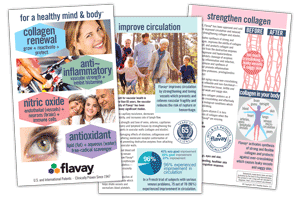
Flavay Plus®
utilizes the dynamic interplay between these nutrients and their co-factors
in order to provide you and your family with the best that nutritional
science has to offer in a convenient, cost effective capsule.
Look, Feel and Think Younger
Get the results you want now: Flavay®
rebuilds collagen, improves circulation and health in skin cells, and
reduces inflammation; boosts the immune system with powerful antioxidant
action; and Flavay
Plus® can help improve concentration, attention and memoryraising
cognitive performance to the levels typical for as much as 12 years younger!
REFERENCES:
Masquelier, J. Plant extract with
a proanthocyanidins content as a therapeutic agent having radical scavenging
effect and use thereof. U.S. Patent No. 4,698,360, 1987.
Masquelier, J. A lifetime devoted to OPC and pycnogenol. Alfa Omega Editrice,
Pub., 1996.
Schwitters, B., Masquelier, J. OPC in practice. Alfa Omega Editrice, Publishers,
1995.
Kilham, C., Masquelier, J. OPC: The miracle antioxidant. Keats Publishing,
Inc., 1997.
Mindell, E., et al. Earl Mindells vitamin bible for the 21st century.
Warner Books, Inc., 1999.
Passwater, R.A. The antioxidants: the nutrients that guard your body. Keats
Publishing, Inc., 1985.
Barilla, J. et al. The nutrition superbook: volume 1: the antioxidants.
Keats Publishing, Inc., 1995.
Lieberman, S., et al. The real vitamin & mineral book: going beyond
the RDA. Avery Pub., 1990.
___. Inadequate intake of vitamins, particularly B-1, can result in mental
illness. Clin. Neuro, 8 (Jul.--Sep. 1985):286-293.
___. Carpal tunnel syndrome treated with riboflavin and pyridoxine. Proceedings
of the Nat. Acad. of Sc. 81 (Nov. 1984):7076-8.
___. High calorie diets with disproportionately low intakes of vitamins
and minerals may be the source of widespread marginal malnutrition. Journ
of the Amer Col of Nut, 7 (1988):61-67.
Facino RM, et al. Free radical scavenging action and anti-enzyme activities
of procyanidines from Vitis vinifera. A mechanism for their capillary protective
action. Arzneimittelforschung, 44: 592-601, 1994.
Kuttan R, et al. Collagen treated with catechin becomes resistant to the
action of mammalian collagenase. Experientia, 37: 221-223, 1981.
Masquelier, J., et al. Stabilization du collagene par les oligomeres procyanidoliques.
Acta Therapeutica, 7:101-105, 1981.
Masquelier, J. Aspects pharmacologiques nouveaux de certains flavonoides.
A Vie Medical 12:1969.
Laparra, J., et al. Etude pharmaco-cinetique des oligomers procyandoliques
totaux du raisin. Acta Therapeutica, 4, 1978.
Laparra, J., et al. Etude pharmacocinetique des oligomeres flavonoliques.
Plantes med et phyto, Tome XI, pp. 133-142, 1977.
Robert A.M.; Groult, N.; Six, C.; Robert, L. Etude de laction des
oligomeres procyanidoliques sur des cellules mesenchymateuses en culture.
Ii lattachment des fibres elastiques aux cellules. (Study of the effect
of procyanidolic oligomers on mesenchymal cells in culture. Ii attachment
of elastic fibers to the cells.) Pat Biol, (30)6:601-7, 1990.
Porter, Lawrence J., Wong Rosalind Y. Chan, Bock G. The molecular and crystal
structure of (+)-2,3-trans-3,4-trans-leucocyanidin [(2r,3s,+r)-(+)-3,3,
4.4, 5.7-Hexahydroxyflavan] dihydrate, and comparison of its
heterocyclic ring conformation in solution and the solid state. Journal
of the Chemical Society; Perkin Transactions I 1985. pp. 1413-17.
Masquelier, J. Proanthocyanidins et radicaux libres. 1985.
Uchida, S., et al. Condensed tannins scavenge active oxygen free radicals.
Med Sci Res, (15) 1987. pp. 831-832.
Ariga, T. Radical scavenging action and its mode in procyanidins b-1 and
b-3 from azuki beans to peroxyl radicals. Agric Biol Chem, 54(10) 1990.
pp. 2499-2504.
Da Silva, R., et. al. Radical scavenger capacity of different procyanidins
from grape seeds. Presented at a symposium, Free radicals in biotechnology
and medicine. Royal Society Of Chemistry, London January 1990, pp.
79-80.
Bauman, J., Wurm, G., Bruchhausen, F. Hemmung der prostagladinsynthetase
durch flavonoide und phenolderivate im vergleich nit deren 02 radikalfangereigenschaften
Arch Pharm, (Weinheim) 313 (1980) pp. 330-337.
Lombard, J., et al. The brain wellness plan. Kensington Pub. Corp., 1998.
Kidd, P.M. Phosphatidylserine: the nutrient that accelerates all brain functions
and counters Alzheimers disease: Keats Pub. 1998.
Cenacchi T, et al. Cognitive decline in the elderly: A double-blind, placebo-controlled
multicenter study on efficacy of phosphatidylserine administration. Aging,
5: 123133, 1993.
Maggioni M, Picotti GB, Bondiolotti GP et al. Effects of phosphatidylserine
therapy in geriatric patients with depressive disorders. Acta Psychiatr
Scand. 81: 265270, 1990.
Brambilla, F., Maggioni, M., Panerai, A.E., et al. Beta-endorphin concentration
in peripheral blood mononuclear cells of elderly depressed patientseffects
of phosphatidylserine therapy. Neuropsychobiology, 34: 1821, 1996.
Monteleone P., Maj M., Beinat L., Natale M., Kemali, D. Blunting by chronic
phosphatidylserine administration of the stress-induced activation of the
hypothalamo-pituitary-adrenal axis in healthy men. Eur J Clin Pharm, 43:
385388, 1992.
Cenacchi T, et al., Cognitive decline in the elderly: A double-blind,
placebo-controlled multicenter study on efficacy of phosphatidylserine administration.
Aging, 5, 123-133, 1993
Funfgeld, E.W., Baggen, M., Nedwidek, P., Richstein, B., Mistlberger, G.
Double-blind study with phosphatidylserine (PS) in parkinsonian patients
with senile dementia of Alzheimers type (SDAT). Prog Clin Biol Res,
317:1235-46, 1989.
Le Bars, P.L., Katz, M.M., Berman, N., Itil, T.M., Freedman, A.M., Schatzberg,
F.A. A placebo-controlled, double-blind, randomized trial of an extract
of ginkgo biloba for dementia. Journal of the Amer Med Assoc, 278 (16):1327-32,
1997.
Waagepetersen, H.S., Sonnewald, U., Schousboe, A. The GABA paradox: multiple
roles as metabolite, neurotransmitter, and neurodifferentiative agent. J
Neurochem, 73:133542, 1999.
Goddard, A.W., Mason, G.F., Almai, A., Rothman, D.L., Behar, K.L., Petroff,
O.A.C., Charney, D.S., Krystal, J.H. Reductions in occipital cortex gaba
levels in panic disorder detected with h-magnetic resonance spectroscopy.
Arch Gen Psychiatry, 58:556-561, 2001.
Braverman, E., et al. The healing nutrients within: in facts, findings and
new research. Keats, 1987.
Cavagnini, F., et al. Effect of acute and repeated administration of gamma
aminobutyric acid (GABA) on growth hormone and prolactin secretion in man.
Acta Endocrinol, 93:14954, 1980.
Bhagavan, H.N., et al. The effect of pyridoxine hydrochloride on blood serotonin
and pyridoxal phosphate contents in hyperactive children. Pediatrics, 1975;55:
437-41.
___. Along with riboflavin, vitamin B-6 deficiency has a primary role in
the cause of emotional disorder. British Journal of Psychiatry, 141(1982):271-272.
___. Current data suggest that as many as 20 percent of medically cleared
population of outpatient depressives may suffer from a vitamin B-6 deficit.
The authors point out that nutrition, diet and vitamin levels have received
very little attention in the psychiatric literature. Biological Psychiatry,
9:4 (1984):613-6.
___. Does depressive illness cause vitamin B-6 inadequacy, or vice-versa?
Nut Rep Int, 27 (Apr. 1993):867-873.
Martineau, J., et al. Vit. B6, magnesium, and combined B6-Mg: therapeutic
effects. Bio Psy, 20:467-78, 1985.
Dolphin, et al. (eds). Vitamin B6: pyridoxal phosphate. John Wiley &
Sons, 1986, chapt. 17.
Langseth, L., et al. Glucose tolerance and hyperkinesis. Food and Cosm Toxicology,
16 Aug. 1977.
OBrien, C. Answers to ADD. Vitamin Retailer, March 2002.
Facino, R.M., et al. Free radical scavenging action and anti-enzyme activities
of procyanidines from vitis vinifera. A mechanism for their capillary protective
action. Arzneimittelforschung, 44: 592-601, 1994.
Kuttan, R., Donnelly, P.V., Di Ferrante, N. Collagen treated with catechin
becomes resistant to the action of mammalian collagenase. Experientia, 37:
221-223, 1981.
Masquelier, J. Procyanidolic oligomers. J Parums Cosm Arom, 95: 89-97, 1990.
Tixier, J.M., et al. Evidence by in vivo and in vitro studies that binding
of pycnogenol to elastin affects its rate of degradation by elastases.
Biochem Pharmacol, 33: 3933-3939, 1984.
Kakegawa, H., et al. Chem. Pharm. Bull. 33:5079, 1985.
Harmand, M.F., Blanquet, P. The fate of total flavanolic oligomers extracted
from vitus vinifera l. in the rat. European Journal of Drug
Metabolism and Pharmaccokinetics. 1978, No. 1 pp. 15-30.
Delrieu, P., Ding J., Escande, B., Samain, D. Free-radical scavenging activity
of proanthocyanidolic oligomers encapsulated in glycospheres: an in vivo
and in vitro study. Cosmetology Department & S Biovectors, Ramonville
St. Agne France. pp. 1-9.
Meunier, M.T., Villie, F., et al. Inhibition of angiotensin i converting
enzyme by flavanolic compounds: in vitro and in vivo studies. Planta Medica,
May 26, 1986. pp. 12-15.
Barbier, A., et al. Activite angioprotectrice des oligomeres procyanidolques
chez lanimal-oedenme de la patte. Sanofi Res Toul Cedex Fr, pp31-40.
Barbier, A., et al. Activite angioprotectrice des oligomeres procyanidolques
chez lanimal-activite aniagoniste vis-a-vis des mediateurs de linflamation.
Sanofi Res Toul Cedex Fr, pp. 31-40.
Dubos, C., Durst, G., Hugonot, H. Evolution de la resistance capillaire,
spontanement ou artificiellement diminuee par laction dune substance
capillaro-toxique chez des personnes agees--action benefique dun agnet
actif sur la micro-circulation: lEndotelon. Inform. Therapeut. 1980.
pp. 302-305.
Dartenuc, J.Y., et al. Resistance capillaire en geriatrie etude dun
microangioprotecteur-Endotelon. Bordeaux Med. 13:903-7, 1990.
Lagrue, G., Olivier-Martin, F., Grillot, A. Etude des effets des oligomeres
du procyanidol sur las resistance capillaire dand lhypertension arterielle
et certaines nephropathies. Sen. Hosp. Paris 18-25 Septembre, 1981.
Beylot, C., Bioulac, P. Essai therapeutique dun angioprotecteur peripherique,
lEndotelon. Actualite Therapeutique Gaz. Med. de France (87)22:2919-24,
1980.
Lesbre, F.X., Tigaud, J.D. Effect de lEndotelon sur lindice
de fragilite capillaire dan une population specifique: les sujets cirrhotiques.
Gaz. Med. de France, (90)24 1983.
Sarrat, L. Abord therapeutique des troubles fonctionnels des membres inferieurs
par un microangioprotecteur lEndotelon. Bordeaux Med, 11:685-8, 1981.
Delacroix, P. Etude en double aveugle de lEndotelon dans linsuffisance
veineuse chronique. Therapeutique, la Revue de Medicine, (27-28) Sept. 1981.
pp. 1793-1802.
Thebaut, J.F, Thebaut, P., Vin, F. Etude de lEndotelon dand les manifestations
fonctionnelles de linsuffisance veineuse peripherique-resultats dune
etude en double aveugle portant sur 92 patients. Gazette Medicale,
(92)1, 1985. pp. 96-100.
Chang, W.C., Hsu, F.L. Inhibition of platelet aggregation and arachidonate
metabolism in platelets by procyanidins. Prostagland Leukotri Essent Fatty
Acids, 38:181-8, 1989.
Masquelier, J. pycnogenol: recent advances in the therapeutical activity
of procyanidins. Supplement of Planta Medica, Journal of Medicinal Plant
Research and Journal of Natural Products, July 1980 pp. 243-256.
Henning, B., et al. Lipid peroxidation and endothelial cell injury: implications
in atherosclerosis. Free Rad Path & Med, (4)1988 pp. 99-106.
Masquelier, J. Les procyanidols du vin leur role dans lalcoolisme.
pp. 88-93.
Gazave, J.M. Notions recentes sur les capillaires unpub. bulletin
from the Laboratoire De Physiologie Patholigie pp. 26-29.
Ruf, J.C. Wine and polyphenols related to platelet aggregation and atherothrombosis.
Office International Vigne et du Vin, Nutrition and Health Unit, Paris France;
Drugs under Experimental and Clinical Research (Switz.) 25/2-3 (125-131),
1999.
Blaszo, G. Gabor, M. Oedema-inhibiting effect of procyanidin. Acta Physiologica
Academiae Scientiarum Hungaricae, Tomus 56(2):235-240, 1980.
Tayau, M.F, LeFevre, G. Action du leucocyanidol sur lhyalaluronidase.
Bull Soc Pharm Bordeaux, 95:132-136, 1956.
Lamy, M. Utilization des oligomeres procyanidoliques en gynecologie. Essai
Therapeutique Tomel (14) Sept. 2, 1981. pp. 1021-22.
Henriet, J.P Une Etude Exemplaire Pour Un Phlebotrope: letude
EIVE. Unpub., pp. 77-83.
Pfister, A., Simon, M.T., Gazave, J.M. Sites de fixation des oligomeres
procyanidoliques dans la paroi des capillaires sanguins du poumon decobaye.
Acta Therapeutica (8) 1982. pp. 223-237.
Kuttan, R., Donnelly, P., Di Ferrante, N. Collagen treated with (+)
-catechin becomes resistant to the action of mammalian collagenase.
Laboratory of Connective Tissue Research, Dept. of Biochem. Baylor Col.
of Med., Houston TX. 28, May, 1980.
Gendre, P., Laparra, J., Barraud, E. Effect protecteur des oligomeres
procyanidoliques sur le lathyrisme experimental chez le rat. Ann.
Pharm. Francaises, (43)1, 1985 pp. 61-73.
Corbe, C., Boissin, J.P., Siou, A. Light vision and chorioretinal circulation.
Study of the effect of procyanidolic oligomer (Endotelon). Jn. Fr. Opthalmol,
(11)5:453-460, 1988.
Boissin, J.P., Corbe C., Siou, A. Chorioretinal circulation and dazzling:
use of procyanidol oligomers (Endotelon). Bull Soc Ophtalmol Fr, 88(2):173-4,
177-9, 1988.
Proto, F. et al. Electrophysical study of vitis vinifera procyanoside oligomers
effects on retinal function in myopic subjects. Ann Ott Clin Ocul, 114:85-93,
1988.
Saracco, J.B., Estachy, G.M. Etude d lEndotelon en opthalmologie.
Gaz Med de France, 88:2035-2038, 1981.
Scharrer, A., Ober, M. Anthocyanosides in the treatment of retinopathies.
Klin Monatsbl Augenheilkd, 178:386-389, 1981.
Corbe, C., et al. Microangiopathy of the retina. J. Fr. Opthalmol, 11:453,
1988.
Verin, M.M., Vildy, A., Maurin, J.F., Retinopathies et O.P.C. Bordeaux Medicale,
(16)11. pp. 1467-74, 1978.
Soyeux, A. et al. Endotelon. Diabetic retinopathy and hemorheology. Bull
Soc Ophtalmol Fr. 87(12):1441-4, 1987.
Fromantin, M. Les oligomeres procyanidoliques dans le traitement de
la fragilite capillaire et de la retinopathie chez les diabetiques. A propos
de 26 cas. Med Int, 16(11):432-434, Nov. 1981.
Arne, J.L. Contribution a letude des oligomeres procyanidoliques:
Endotelon, dans la retinopathie diabetique (a propos de 30 observations).
Gaz. Med. de France, Vol. 89, No. 30, Oct. 8, 1982.
Baruch, J. Effect of Endotelon in postoperative edema. Results of a double-blind
study versus placebo in 32 female patients. Ann Chir Plast Esthet 29(4):393-5,
1984.
Rao, C.N. et al. Influence of bioflavonoids on the collagen metabolism in
rats with adjuvantinduced arthritis. Ital J Biochem. 30:54-62, 1981.
Gabor, M. Pharmacologic effects of flavonoids on blood vessels. Angiologica,
9:355-374, 1972.
Havsteen, B. Flavonoids, a class of natural products of high pharmacological
potency. Biochem Pharmacol, 32:1141-48, 1983.
Reimann, H.J., Lorenz, W., Fischer, M., Frölich, R., Meyer, H.J. Berkhauser
Verlag, Vol. 7/1, Univ. of Marburg/Lahn, Ger., 1977.
Masquelier, J. Action protectrice du vin sur lulcere gastrique. Resultats,
p. 61.
Amella, M., et al. Inhibition of mast cell histamine release by flavonoids
and bioflavonoids. Planta Medica, 5116-20, 1985.
Packer, L., et al. The antioxidant miracle: your complete plan. John Wiley
& Sons, Inc., 1999.
Shaw, R. How [Australian] PycnoGenol [MASQUELIERs®] Helps Sports
People.
Masquelier, J. Procyanidolic oligomers (leucocyanidins). Parfums Cosmet
Arom 95:89-97, 1990.
Pecking, A., Desprez-Curely, J.P., Megret, G. Oligomers procyanidoliques
(Endotelon) dans le traitement des lymphoedemes post-therepeutiques de members
superieurs. Symposium Satellite, Congres International dAngiologie,
Toulouse, France, 4-7 Oct. 1989.
Fahey, T.D., Pearl M. Hormonal effects of phosphatidylserine during 2 weeks
of intense training. Abstract submitted to national meeting of the Amer
College of Sports Medicine, June 1998.
Monteleone, P., Maj, M., Beinat, L., Natale, M., Kemali, D. Blunting by
chronic phosphatidylserine administration of the stress-induced activation
of the hypothalamo-pituitary-adrenal axis in healthy men. Eur J Clin Pharm
43: 385388, 1992.
Fahey, T.D., et al. The hormonal and perceptive effects of phosphatidylserine
administration during two weeks of resistive exercise-induced overtraining.
Bio of Sport 15(3):135-44, 1998.
Laparra, J., Michaud, J. Masquelier, J. Action des oligomeres procyanidoliques
sur le cobaye carence en vitamin c. Tavaux Originaux, University of Bordeaux,
1976.
Masquelier, J. Action comparee de divers facteurs vitaminiques p sur loxydation
de lacide ascorbique par les ions cuivriques. Bull. de la Societe
de Chimie Biologique XXXIII (3-4) 1951. pp. 302-304.
Masquelier, J. Action comparee de divers facteurs vitaminiques p sur lacide
ascorbique-oxydase. Bull. de la Societe de Chimie Biologique XXXIII (3,4)
1951. pp.304-306
Kakegawa, H., Matsumoto, H., Endo, K., Satoh, T., Nonaka, G., Mishioka,
I. Inhibitory effects of tannins on hyaluronidase activation and on
the degranulation from rat mesentery mast cells. Chem. Pharm. Bull.
33(11)1985. 5079-5082.
Reiman, H.J., Lorenz, M., Fischer, R., Frolich, H., Meyer, J. Histamine
and acute haemorrhagic lesions in rat gastric mucosa: prevention of stress
ulcer formulation by (+)-catechin, an inhibitor of specific histidine decarboxylase
in vitro. Dirkhauser Verlag,Vol. 7/1, 1977.
Pariente, J.J. Parientl-Amsellem, J. Les oedemes post-traumatoqies
chez le sportif: essai controle de lEndothelon. Actualite Therapeutique
90(3) 2/11 1983 pp. 231-235.
Masquelier, J., et al. Flavonoids et pycnogenol Int J Vit Nut
Res, (49)3:307-311, 1979.
Yu, C. L. et al. Mutagenicity of proanthocyanidins. Food Chem. Toxicol.
25(2):135-9, 1987.
Pantaleoni, G.C., Quaglino, D. Univerisity of Aquila Pharmacol-Toxicologica
Report, 1971.
Laparra, J., et al., Acta Therapeutica, 4:233, 1978.
Volkner, Wolfgang Muller, Ewald, Micronucleus assay in bone marrow cells
of the mouse with Pycnogenol. Cytotest Cell Research GmbH & Co., projects
143010 & 143021; Feb. 1989.
Acute and chronic toxicity tests. International Bio-Research, Inc., Hanover,
Germany, 1967-1971.
Dumon, M., Michaud, J., Masquelier, J. Proanthocyanidin content in vegetable
extracts to be used in the preparation of medicines. Bull. Soc. Pharm. Bordeaux,
129:51-65, 1990.